Why You’re Still Tired: The Missing Link Between Hydration, Electrolytes, and Energy
If you feel tired throughout the day—even after a full night of sleep—you are not alone.
Fatigue is one of the most common complaints in primary care. While sleep, stress, and hormones are often discussed, one important factor is frequently overlooked: hydration.
Your energy levels are closely tied to how well your body is hydrated and how efficiently your cells are functioning.
Why am I still tired even when I sleep well?
Fatigue is not always caused by lack of sleep. It often results from an imbalance between energy use and energy restoration in the body.
Common contributors include:
- Dehydration
- Poor nutrition
- Low physical activity or overtraining
- Stress
- Metabolic imbalance
Even mild dehydration can affect how your body and brain function, leading to decreased energy and performance.
What does hydration have to do with energy?
Water plays a critical role in nearly every function in the body. It is involved in:
- Circulation of nutrients and oxygen
- Temperature regulation
- Cellular energy production
- Removal of waste products
When hydration is suboptimal, these processes become less efficient, leading to fatigue, reduced focus, and decreased physical performance.
How does dehydration affect performance?
Even small fluid losses can have noticeable effects.
Losing as little as 2% of body weight from dehydration can:
- Reduce endurance
- Increase fatigue
- Impair concentration and cognitive performance
Greater levels of dehydration can further impact cardiovascular function and physical output. 1
Hydration is also one of the most modifiable factors affecting heat tolerance and exercise performance. 2
What are the signs of dehydration?
Dehydration is often underrecognized. Common signs include:
- Fatigue or low energy
- Headaches
- Dizziness
- Brain fog
- Dry mouth
- Muscle cramps
In many cases, people normalize these symptoms without realizing hydration may be a contributing factor.
Is water alone enough?
Not always.
Hydration is not just about water—it is also about electrolyte balance. Electrolytes such as sodium, potassium, and magnesium help regulate:
- Fluid balance
- Nerve signaling
- Muscle function
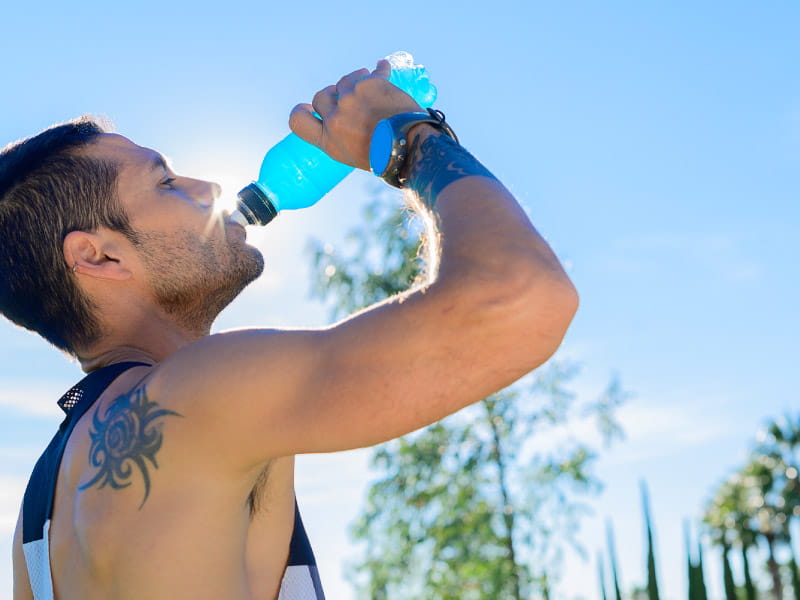
In situations involving sweating, exercise, or heat exposure, replacing electrolytes becomes especially important.
How much water do you actually need?
There is no single “perfect” number for everyone.
General guidance suggests:
- About 9 cups per day for women
- About 13 cups per day for men
However, needs vary based on:
- Activity level
- Climate
- Body size
- Diet
Your body has built-in mechanisms (like thirst) to help regulate hydration, but many people do not respond to these signals consistently.
Simple ways to improve your energy through hydration
1. Start your day with water
After several hours of sleep, your body is naturally dehydrated. Rehydrating in the morning can help improve energy and focus.
2. Hydrate consistently—not all at once
Spacing fluid intake throughout the day is more effective than drinking large amounts at once.
3. Add electrolytes when appropriate
Consider electrolytes if you:
- Exercise regularly
- Sweat heavily
- Spend time in heat
4. Pay attention to early signs
Do not wait until you feel significantly thirsty. Early fatigue or headaches may already indicate mild dehydration.
5. Look at the full picture
Hydration works together with:
- Nutrition
- Sleep
- Physical activity
Addressing all of these factors leads to better energy overall.
The bottom line
If you are feeling persistently tired, hydration may be part of the issue.
Even mild dehydration can impact how your body performs—physically and mentally. The good news is that this is one of the easiest areas to improve.
Small, consistent changes in how you hydrate can lead to noticeable improvements in energy, focus, and overall well-being.
Want to feel more energized throughout the day?
A personalized approach to hydration, nutrition, and metabolic health can help identify what is contributing to your fatigue and create a plan tailored to your lifestyle and goals.